Design your quilt. Get every cut.
Pick a block, a size and your colors, and get the numbers before you cut: the finished size, a cutting list with 1/4" seam allowance, the yardage to buy, and the binding, backing and batting. The quilt comes together on screen as you go.
Fabric to buy
Assumes 40" usable width of fabric. Rounded up to the nearest 1/8 yard.
| Fabric | Buy |
|---|---|
| Fabric A (triangles) | 1 5/8 yd |
| Fabric B (background) | 1 5/8 yd |
| Border 1 | 3/4 yd |
| Binding (7 strips × 2 1/2") | 1/2 yd |
| Backing (2 panels, horizontal seam) | 3 1/2 yd |
| Batting | 62" × 78" |
Cutting list
Fabric A (triangles) · 1 5/8 yd
| Cut | Size | Pieces | Strips × WOF |
|---|---|---|---|
| Squares for HSTs Makes 192 HSTs (192 needed), each 4 1/2" unfinished. | 4 7/8" sq | 96 | 12 × 4 7/8" 8 per strip |
The full pattern adds cutting for 2 more fabrics, binding strips, step-by-step assembly and a printable pattern.
Assembly instructions
The full pattern includes the assembly order, border steps, and binding instructions for this quilt.
Your shopping list
Worked out from this pattern: what to buy, how much, and why.
- Quilting cotton: Fabric A (triangles)1 5/8 yd12 strips across a 40" usable width for the cutting list, rounded up to the nearest 1/8 yard.Find on Amazon
- Quilting cotton: Fabric B (background)1 5/8 yd12 strips across a 40" usable width for the cutting list, rounded up to the nearest 1/8 yard.Find on Amazon
- Quilting cotton: Border 13/4 yd7 strips across a 40" usable width for the cutting list, rounded up to the nearest 1/8 yard.Find on Amazon
- Binding fabric (quilting cotton)1/2 yd7 strips 2 1/2" × WOF, joined into one 258" length (perimeter plus 10").Find on Amazon
- Backing fabric3 1/2 yd2 panels for a 62" × 78" backing: the quilt top plus 4" on every side.Find on Amazon
- Batting62" × 78" or largerFinished quilt 54" × 70" plus 4" on every side, so it does not fall short while you quilt.Find on Amazon
- Cotton piecing threadA neutral color that blends with your fabricsEvery seam is sewn with a 1/4" seam allowance.Find on Amazon
- Rotary cutter1 (45 mm is a common size)Cuts the strips and pieces in the cutting list across the 40" width.Find on Amazon
- Self-healing cutting mat1, at least 16" × 24"Goes under the rotary blade. A 24" length fits fabric folded selvage to selvage.Find on Amazon
- Clear acrylic quilting ruler1, about 6" × 24"Every cut size in this pattern lands on the 1/8" marks of a quilting ruler.Find on Amazon
As an Amazon Associate, Needle Nook earns from qualifying purchases. Each button opens an Amazon search, not a specific product; we have not tested the products it shows.
Want more patterns? See Pattern PacksGet the whole quilt pattern, ready to print
- Complete cutting list for all 3 fabrics
- Assembly order, binding and backing steps
- Printable pattern with your colors and preview
- Save this quilt and come back to it later
One payment, no subscription. Includes printing, saved projects for every generator and 50 AI credits. Secure checkout by Stripe.
Assumptions used for these numbers
- All seams are 1/4". Cut sizes include seam allowance.
- Usable width of fabric is 40" after removing selvages. Pieces are cut from strips across that width.
- Yardage is rounded up to the nearest 1/8 yard. No extra is added for shrinkage or cutting mistakes, so consider buying a little more.
- Two-at-a-time method: pair one A square with one B square, draw a diagonal, sew 1/4" on both sides and cut on the line to get two HSTs. Squares are cut at the finished HST size plus 7/8".
- Sashing runs between blocks only, without cornerstones. Borders are added as two side strips, then top and bottom strips.
- Binding uses 2 1/2" strips cut across the width. Length is the quilt perimeter plus 10" for joining and finishing.
- Backing and batting are 4" larger than the quilt top on every side. Backing panels are joined with 1/2" seams.
Binding, backing and batting for common quilt sizes
A 60" × 72" quilt needs 274" of binding (7 strips of 2 1/2", 1/2 yd), 4 1/2 yd of backing in 2 panels of 40"-wide fabric, and 68" × 80" of batting. The generator works these out for any quilt you design; the table gives them for the common sizes in its list.
| Quilt top | Binding | Backing | Batting |
|---|---|---|---|
| Baby 36" × 52" | 186": 5 strips, 3/8 yd | 2 1/2 yd, 2 panels | 44" × 60" (crib package) |
| Throw 50" × 65" | 240": 6 strips, 1/2 yd | 3 1/4 yd, 2 panels | 58" × 73" (twin package) |
| Twin 70" × 90" | 330": 9 strips, 5/8 yd | 5 1/2 yd, 2 panels | 78" × 98" (queen package) |
| Full 85" × 108" | 396": 10 strips, 3/4 yd | 7 3/4 yd, 3 panels | 93" × 116" (king package) |
| Queen 90" × 108" | 406": 11 strips, 7/8 yd | 8 1/4 yd, 3 panels | 98" × 116" (king package) |
| King 108" × 108" | 442": 12 strips, 7/8 yd | 9 3/4 yd, 3 panels | 116" × 116" (king package) |
Assumptions: binding is 2 1/2" strips cut across a 40" usable width, total length the perimeter plus 10". Backing and batting are 4" larger than the top on every side; backing panels are joined with 1/2" seams in whichever direction needs less fabric. Yardage is rounded up to the next 1/8 yard. A designed quilt is a whole number of blocks, so its top can come out a little different from these sizes; the generator uses your real top. Step-by-step reasons are in the binding and backing guide and the batting sizes chart.
Exact numbers, every assumption shown
Choose a block and size
Six classic blocks. Enter blocks across and down, or pick a common quilt size and the generator finds the closest fit.
Add sashing, borders and color
Optional sashing between blocks, one or two borders, palette presets or your own colors. The preview updates as you go.
Cut, buy and sew
Cut sizes include the 1/4" seam allowance. Yardage assumes 40" usable fabric width, rounded up to the nearest 1/8 yard.
Try everything, no account needed
- Live quilt preview in your colors
- Finished quilt size and block count
- Yardage for every fabric, binding and backing
- The cutting list for your first fabric
- Every assumption behind the numbers
The full pattern, yours to keep
- The complete cutting list for every fabric
- Assembly order, binding and backing steps
- A printable pattern with your preview
- Saved quilts in your account
- 50 AI helper credits
Good to know
How is the yardage worked out?
Each piece is cut from strips across a 40" usable width of fabric. The generator counts how many pieces fit in one strip, how many strips you need and how wide they are, adds the strips for each fabric and rounds up to the nearest 1/8 yard. It tries both orientations of each piece and uses the one that needs less fabric.
What seam allowance does it use?
A 1/4" seam allowance. Squares are cut 1/2" larger than their finished size. Half-square triangles made two at a time start as squares 7/8" larger than the finished HST. No-waste flying geese use one large square at the goose width plus 1 1/4" and four small squares at the goose height plus 7/8".
Why can I not choose any block size?
Blocks are built from equal units: a nine-patch is 3 units across, a log cabin 7 and an HST block 2. Each unit has to land on the 1/8" marks of a quilting ruler, so the finished block size must divide evenly into 1/8" steps. The generator suggests sizes that work.
How are binding and backing calculated?
Binding uses 2 1/2" strips cut across the width, with a total length of the quilt perimeter plus 10". Backing is 4" larger than the quilt top on every side. When it is wider than 40", panels are joined with 1/2" seams in whichever direction needs less fabric.
How much binding and backing do I need for a queen quilt?
For a 90" × 108" queen top: 406" of binding, which is 11 strips of 2 1/2" and 7/8 yard, and 8 1/4 yards of 40"-wide backing in three panels. The batting needs to be 98" × 116", larger than a queen package, so buy king batting. The table above lists the other common sizes.
Can I use this as a binding and backing calculator only?
Mostly. Pick a size, or "Custom size" with your own width and length, and read the binding, backing and batting lines under the yardage. The generator fits whole blocks to that size, so its top can differ by a few inches, and those lines follow the real top. For a top you have already sewn, the table above and the binding and backing guide give the same rules to work by hand.
Are the common quilt sizes standard?
No. Quilt sizes vary between makers and mattresses, so the sizes in the list are labelled common sizes. Measure the bed or the space where the quilt will go if the fit matters, and enter a custom size.
Learn the method
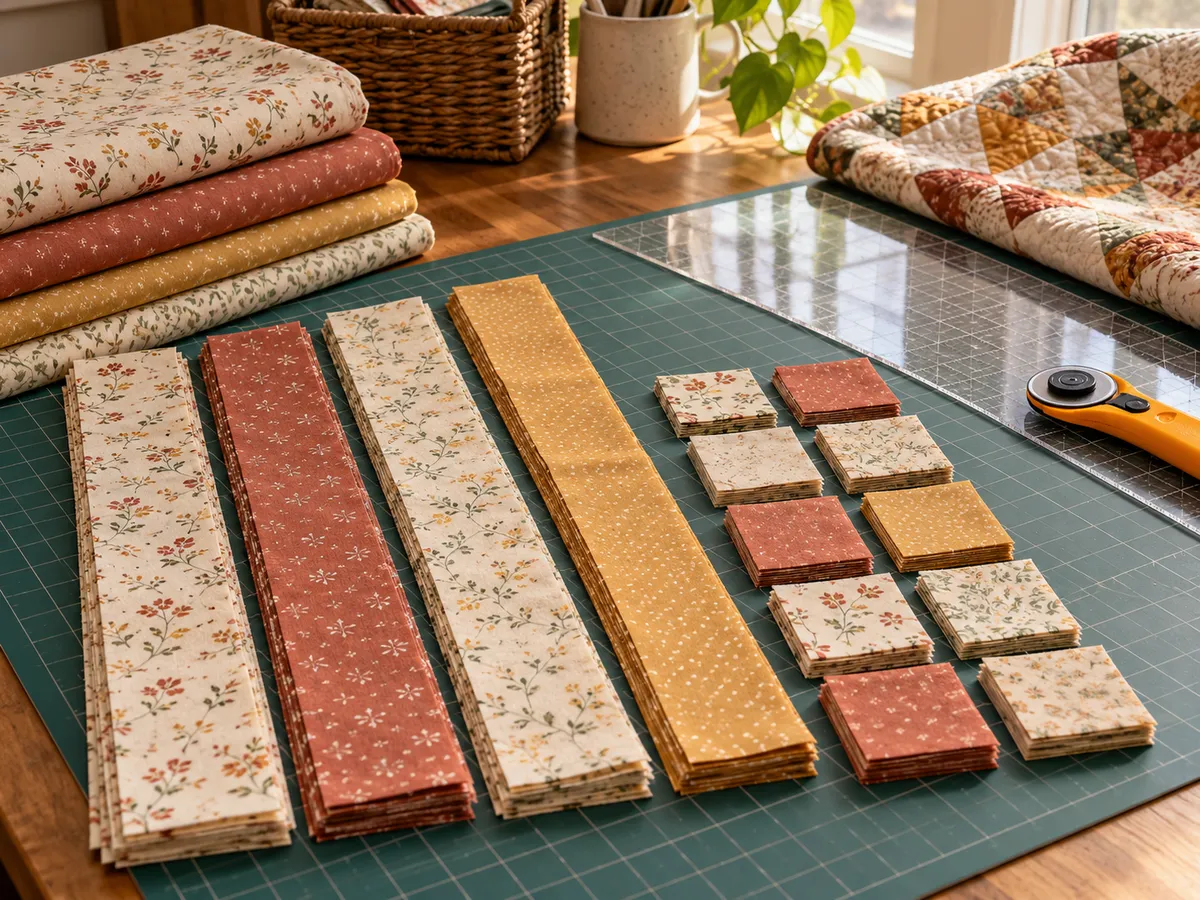 How Much Fabric Do I Need for a Quilt?Quilt fabric from your cut pieces: strips across a 40" usable width, rounded up to 1/8 yard. Chart for crib to king, with backing and binding.
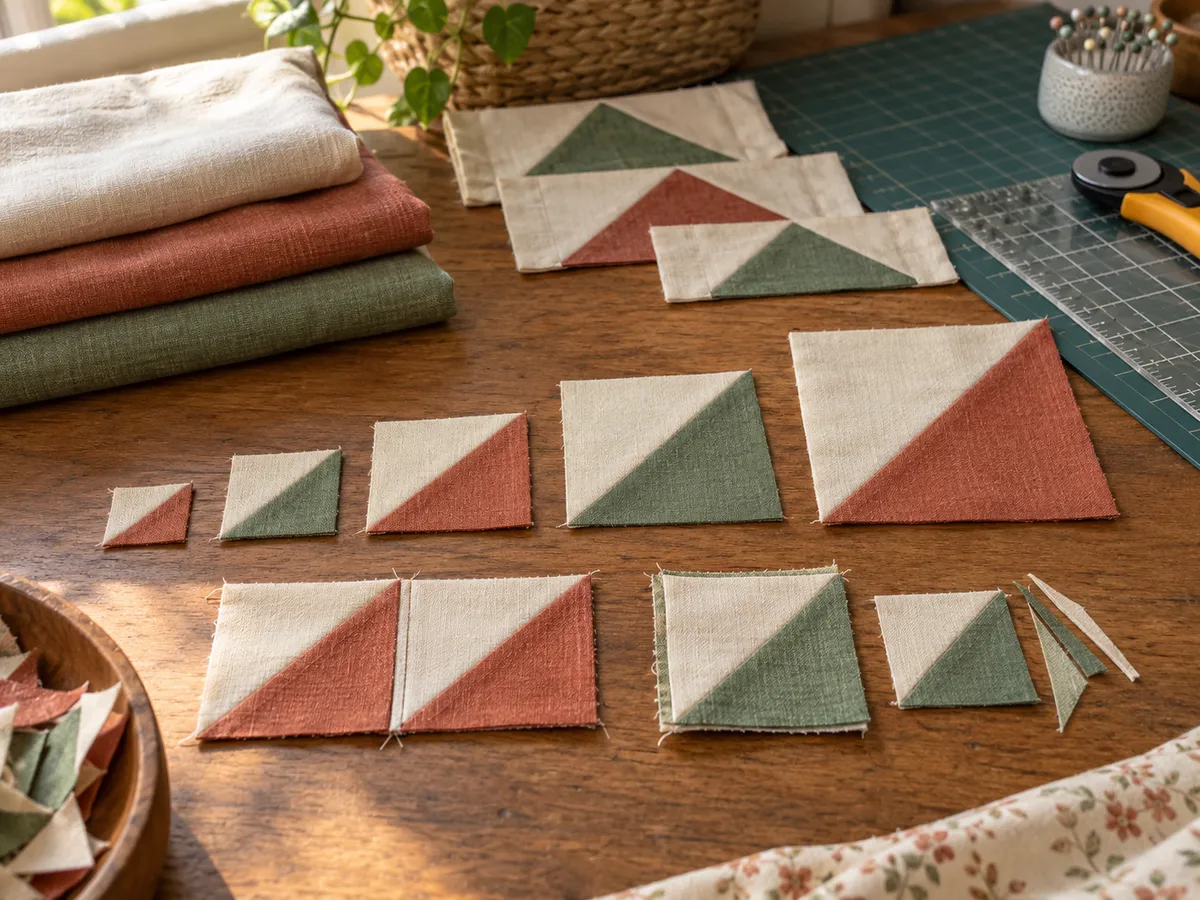 Half-Square Triangle Math: Cut Sizes ChartCut size for half-square triangles made two at a time: finished size plus 7/8", or plus 1" to trim. Includes a chart, flying geese sizes and yardage.
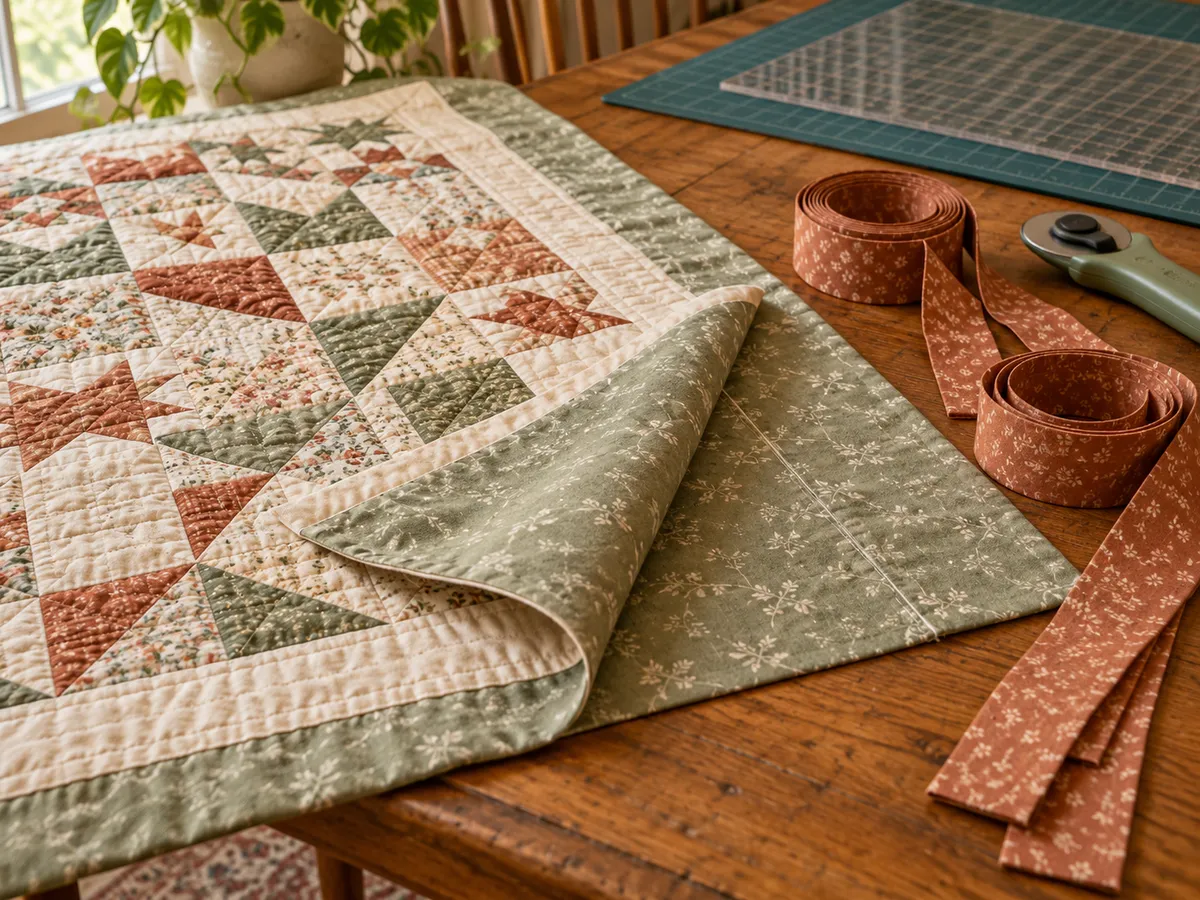 Quilt Binding and Backing Yardage Calculator GuideHow much binding and backing fabric a quilt needs: 2 1/2" strips for perimeter plus 10", backing 4" larger on every side, and which way to seam it.
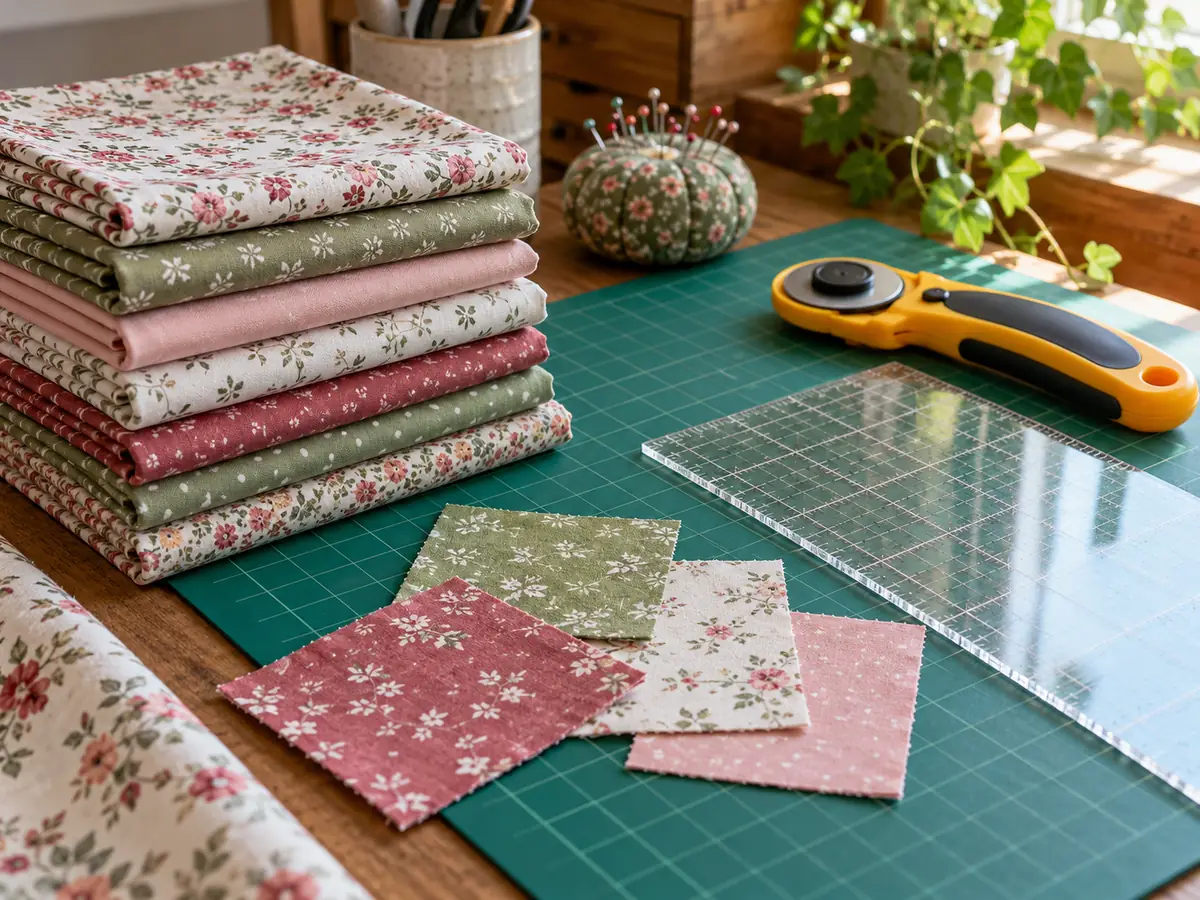 How Many Fat Quarters Do I Need for a Quilt?Count the pieces one fat quarter gives, divide your total by it and round up. Chart of squares per fat quarter, plus worked examples for two throw quilts.
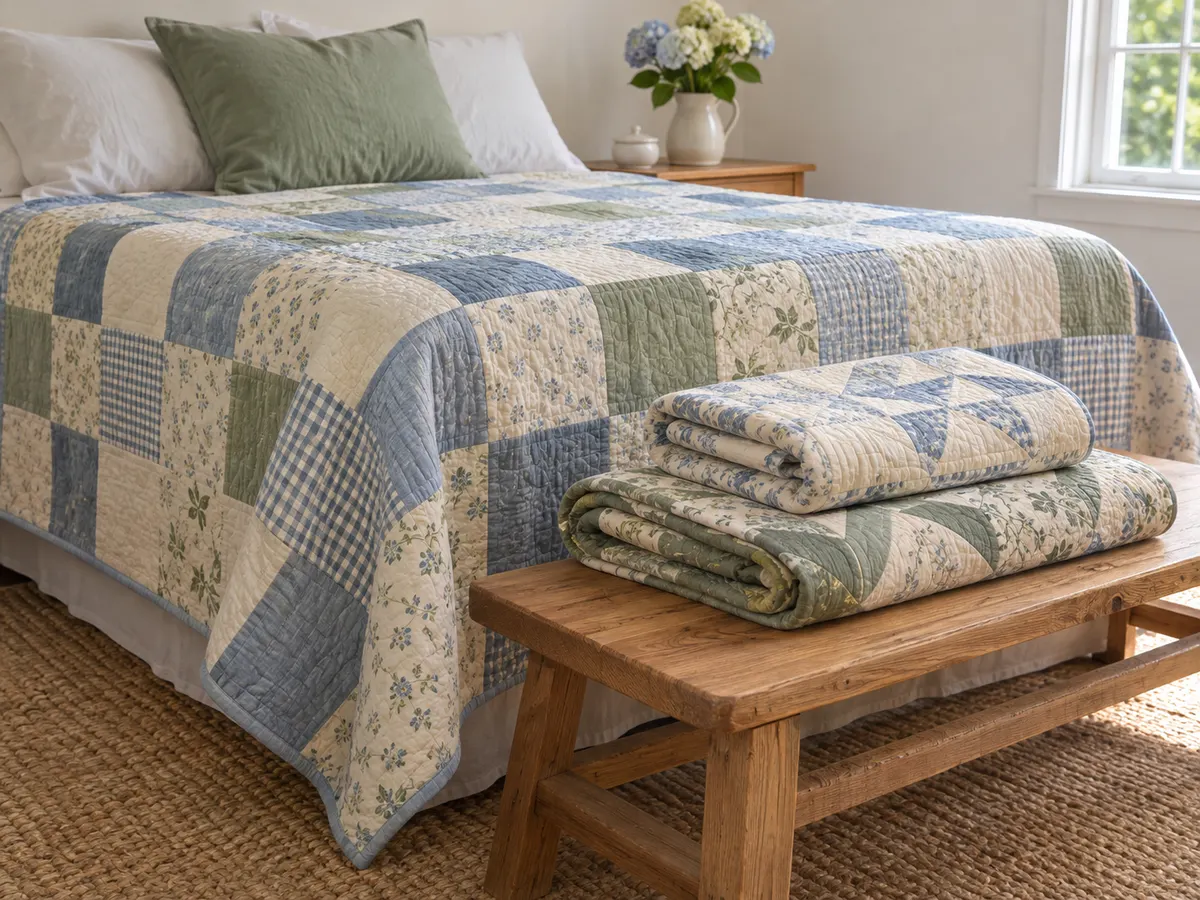 Quilt Sizes Chart: Crib, Throw, Twin, Queen, KingQuilt size = mattress + drop on the sides and foot. Mattress sizes, quilt sizes at a 12" drop, typical finished sizes and a worked queen example.
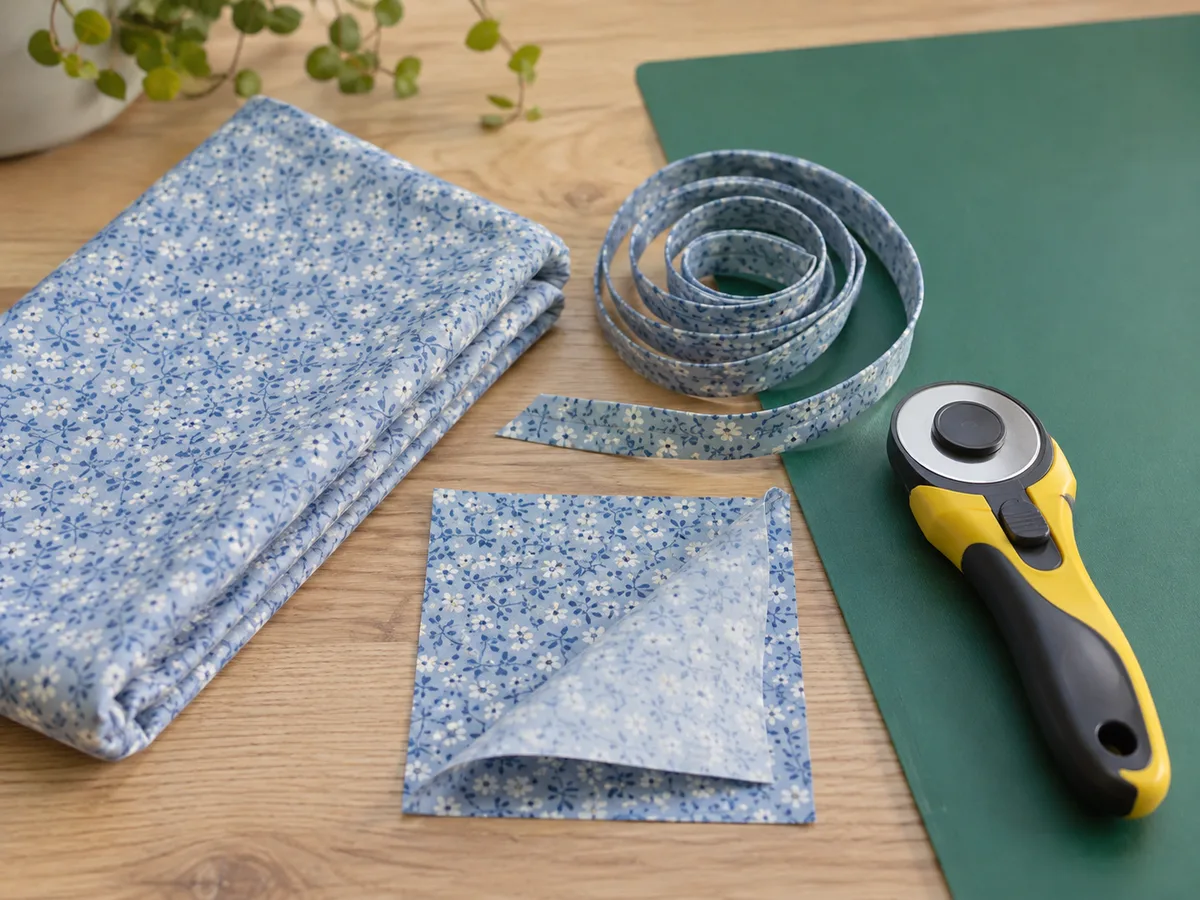 How Much Bias Tape Does a Yard of Fabric Make?A yard of 40"-wide cotton gives about 518" (14.4 yd) of 2 1/2" continuous bias tape, 576" at 2 1/4". Formula, chart from a fat quarter to 1 1/4 yards, square method.
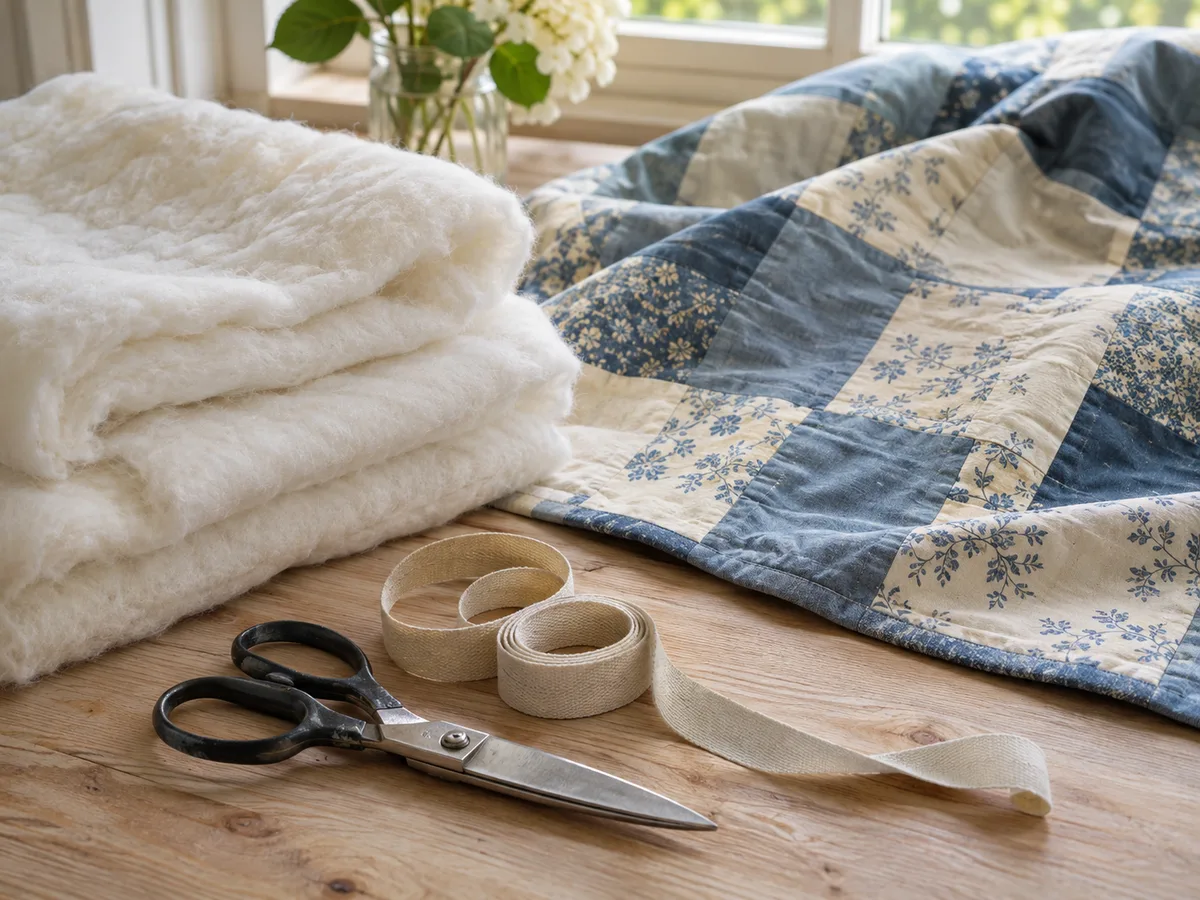 Quilt Batting Sizes Chart: What Size to BuyBatting should be 8" wider and longer than the quilt top. Packaged sizes from crib 45" × 60" to king 120" × 120", the largest top each covers, and roll yardage.
Add this generator to your site
Free for your blog, guild page or class notes. Paste this code where you want the generator to appear. Keeping the credit line is appreciated, not required.