Your gauge in. Your pattern out.
Give it your gauge and size, and it writes a blanket, scarf, amigurumi ball, beanie or granny square blanket row by row, with the stitch count at the end of every line. Switch between US and UK terms at any time: US single crochet (sc) is UK double crochet (dc).
| ch | chain |
| sl st | slip stitch |
| sc | single crochet |
| hdc | half double crochet |
| dc | double crochet |
| sc2tog | sc two together (decrease) |
| st(s) | stitch(es) |
Written pattern
US terms. The number at the end of each line is the stitch count after that row or round.
- FoundationCh 107.chains107 ch
- Row 1Hdc in 3rd ch from hook and in each ch across.105 sts
- Rows 2–90Ch 2 (does not count as a st), turn. Hdc in each st across.105 sts
- FinishFasten off and weave in the ends. Block to the finished measurements.
Your shopping list
Worked out from this pattern: what to buy, how much, and why.
- Yarn: the yarn you swatched withEnough for your size. Enter the yarn in your gauge swatch to get an estimate; check the yardage on the label.The Craft Yarn Council weight table is given in single crochet gauge, so a hdc gauge does not map to one weight. Use the yarn you measured. Buy all skeins from one dye lot.Find on Amazon
- Crochet hookThe hook you made your gauge swatch withThe pattern is worked out from the gauge you measured with that hook.Find on Amazon
- Yarn needle (blunt tapestry needle)1Weaves in the ends when you fasten off.Find on Amazon
- Tape measure1Measures your gauge swatch, which every count in this pattern comes from.Find on Amazon
As an Amazon Associate, Needle Nook earns from qualifying purchases. Each button opens an Amazon search, not a specific product; we have not tested the products it shows.
Want more patterns? See Pattern PacksAssumptions used for these numbers
- Stitch and row counts are rounded to the nearest whole number from your gauge over 4" (10 cm).
- Turning chains: sc ch 1 and hdc ch 2 do not count as stitches; dc ch 3 counts as the first dc.
- Gauge is measured after blocking, in the same stitch the pattern uses.
Exact numbers, every assumption shown
Pick a project
A rectangle in single, half double or double crochet, an amigurumi ball, a top-down beanie or a granny square blanket.
Enter your gauge and size
Stitches and rows per 4" from your own swatch, plus the finished size. For a beanie, the head measurement and negative ease. Add the yarn in your swatch for a yardage estimate.
Crochet with confidence
Foundation chain, turning chains and every row or round, each ending with its stitch count so you can check as you go.
Try everything, no account needed
- All four project types
- US and UK terms with an abbreviation key
- Stitch counts, finished size and a round diagram
- Yarn estimate from your own swatch, in yards and skeins
- The first lines of every pattern
- Every assumption behind the numbers
The full pattern, yours to keep
- Every row and round to the end
- A clean printable pattern
- Saved patterns in your account
- All other generators in full
- 50 AI helper credits
Good to know
Which turning chains does the generator use?
In rows, single crochet uses ch 1 and half double crochet ch 2, and neither counts as a stitch. Double crochet uses ch 3, which counts as the first stitch. In joined rounds the starting chain never counts as a stitch (ch 1 for sc, ch 2 for hdc and dc). Patterns from other designers can use different conventions.
How does the amigurumi ball work?
It starts with 6 single crochet in a magic ring and adds 6 stitches every round until the widest round is close to pi times the diameter at your gauge. Even rounds fill the middle, then the decreases mirror the increases back down to 6 stitches.
How is the beanie sized?
Hat circumference is your head circumference minus the negative ease you choose (2" by default). The crown is a flat circle that grows until it has the stitches for that circumference; it should measure about circumference ÷ pi across. Even rounds then bring the hat to your chosen height.
What are UK crochet terms?
The same stitches with names shifted by one: US single crochet is UK double crochet, US half double is UK half treble and US double is UK treble. Slip stitch is ss in UK patterns and skip is miss.
Does it work out yarn amounts?
Yes, from your own swatch, never from a guess. Yarn use depends on fiber, weight, hook and tension, so the generator asks how much yarn went into your 4" × 4" gauge swatch (or one granny square), as a length or a weight with the skein label. It scales that by the area of your project, adds 10% for ends and joining, and shows yards, meters and skeins.
Learn the method
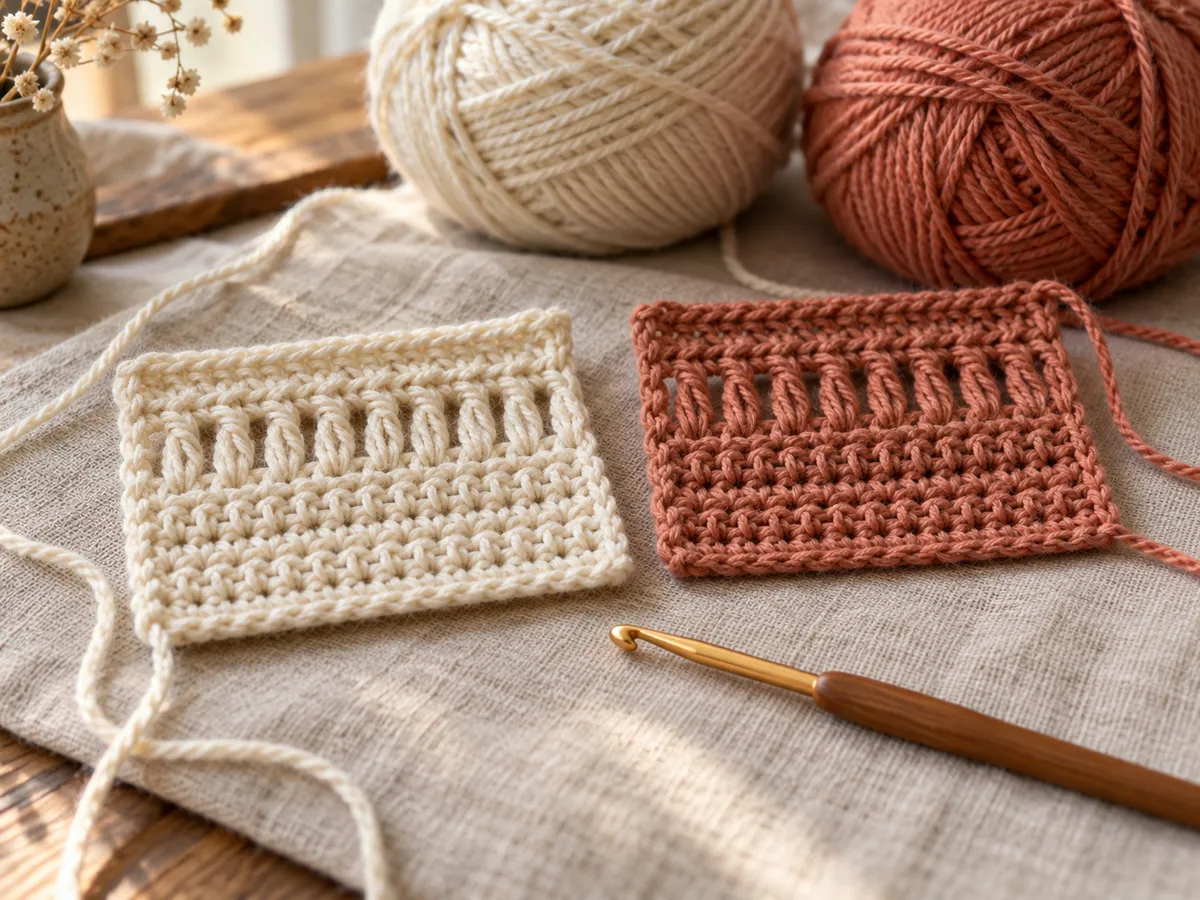 US vs UK Crochet Terms (and How to Read a Pattern)A US to UK crochet terms chart (sc = UK dc, dc = UK tr) plus how to read a pattern: abbreviations, turning chains, repeats and stitch counts.
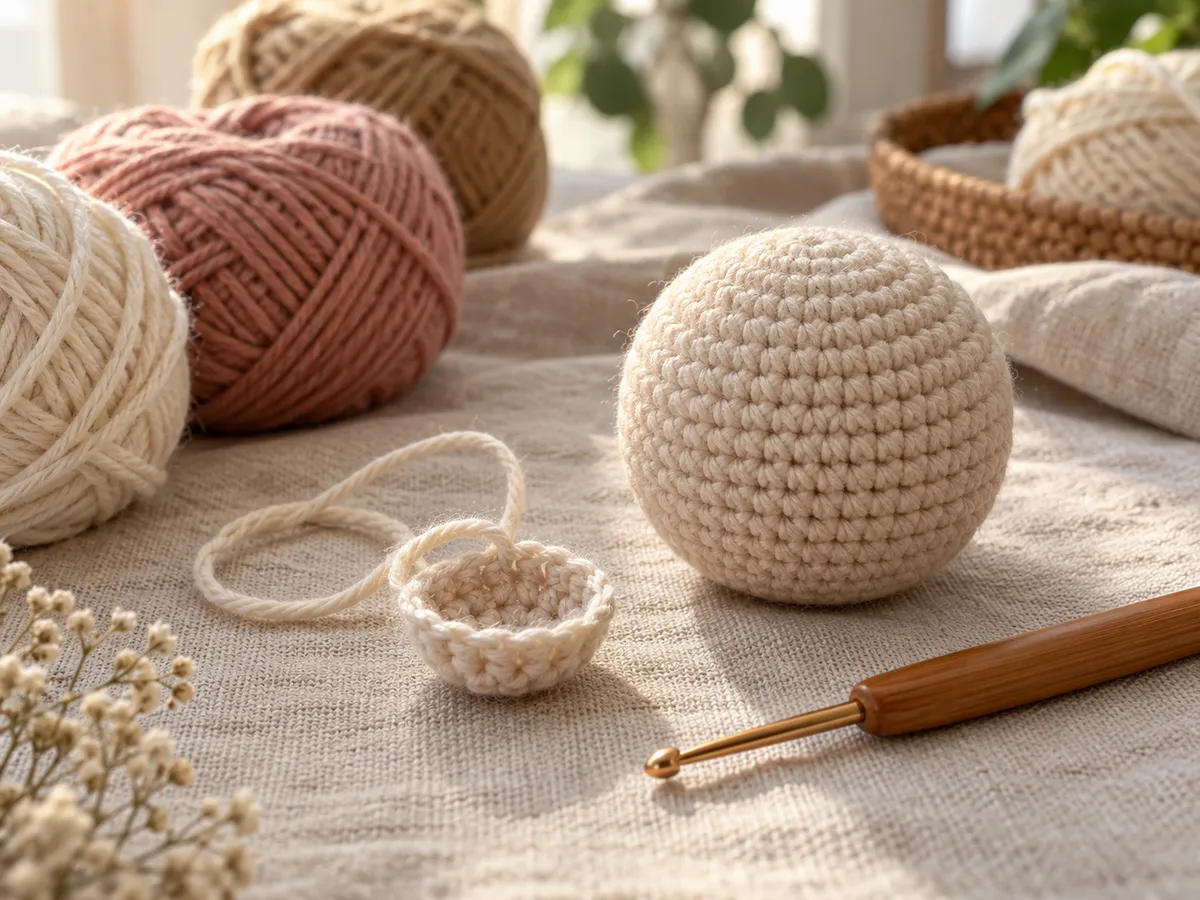 Crochet Magic Ring and Amigurumi Ball PatternStart a crochet ball with 6 sc in a magic ring, add 6 stitches per round (12, 18, 24), work even, then decrease 6 per round back to 6 and close.
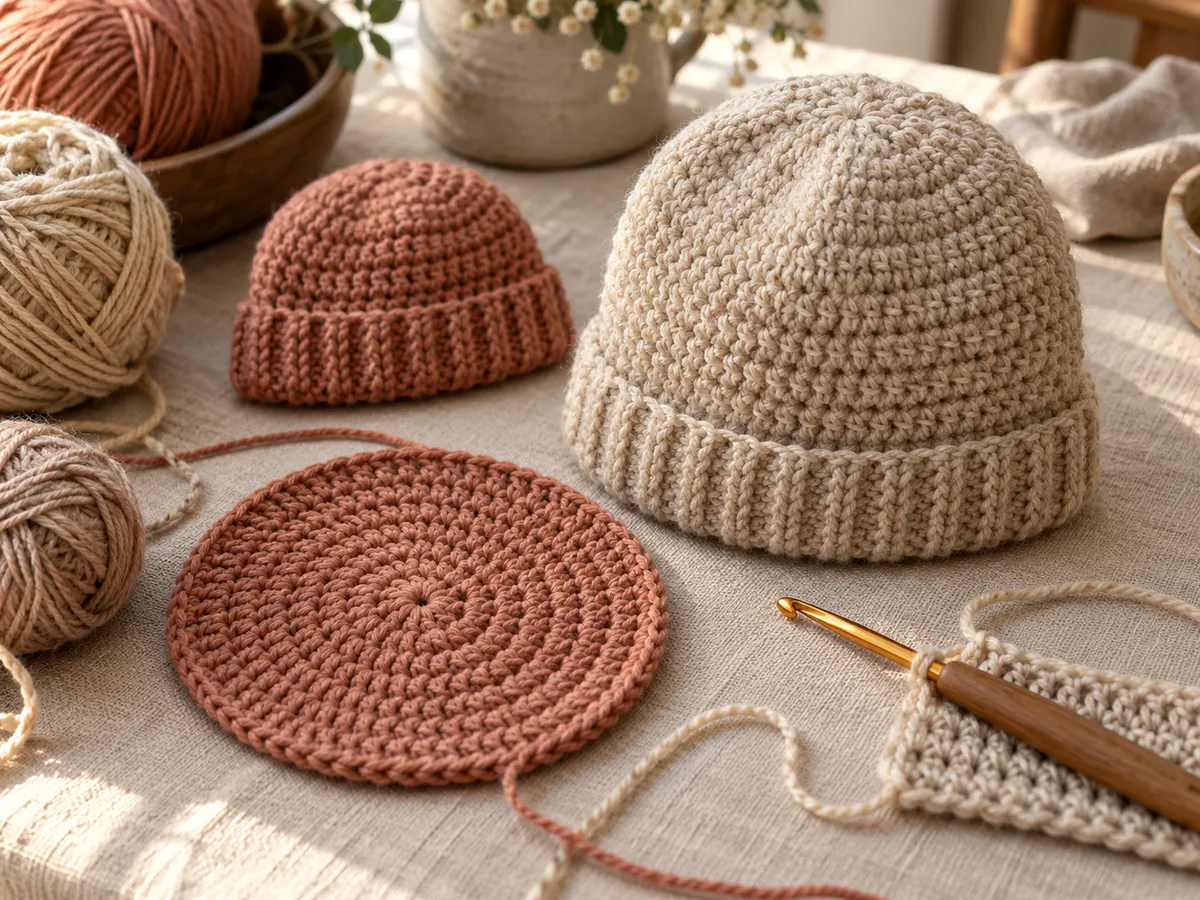 Crochet Beanie Size Chart and Crown MathCrochet beanie sizes from head circumference: subtract negative ease, divide by pi for crown diameter, then work even to the hat height. Chart included.
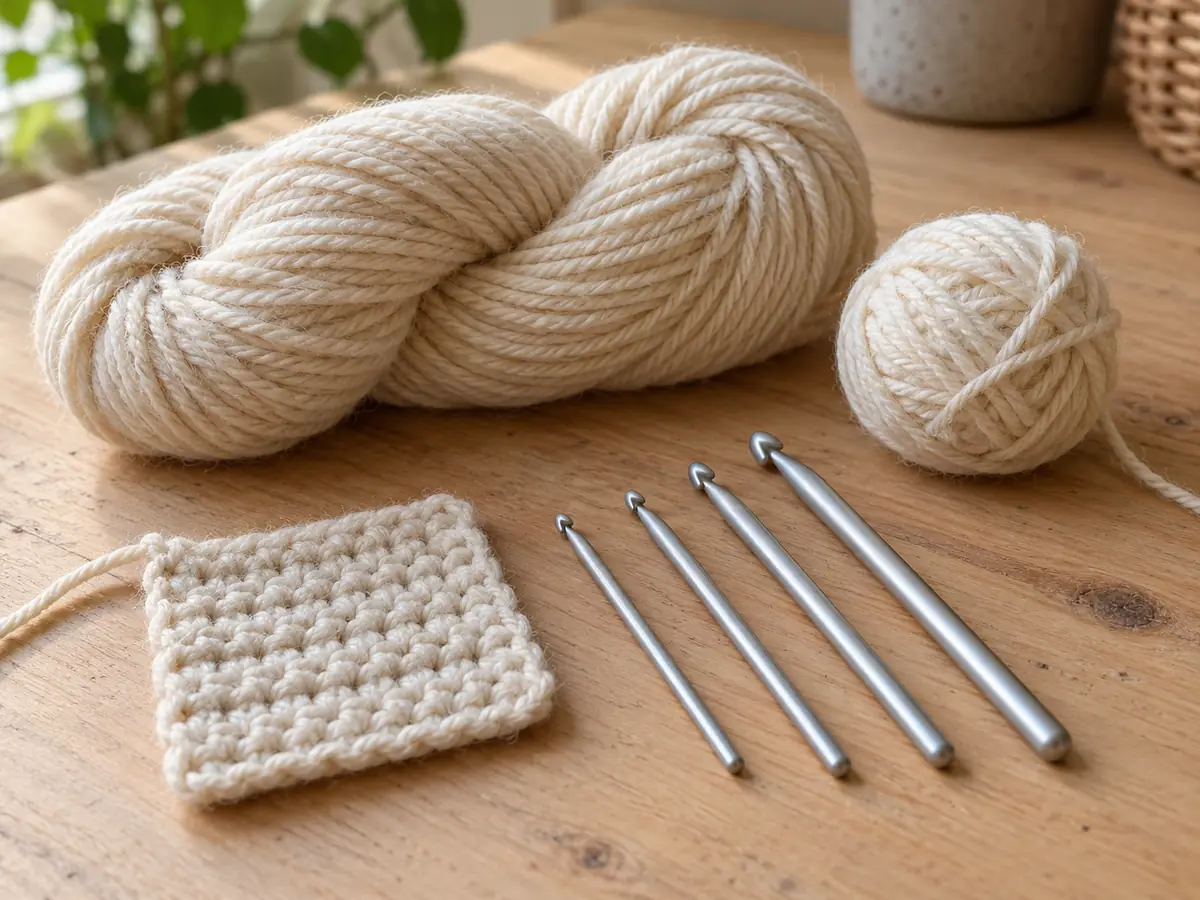 What Size Crochet Hook for Worsted Yarn?Worsted is Craft Yarn Council weight 4 (Medium). The standard hook range is 5.5 to 6.5 mm (US I-9 to K-10 1/2); a gauge swatch picks the exact size.
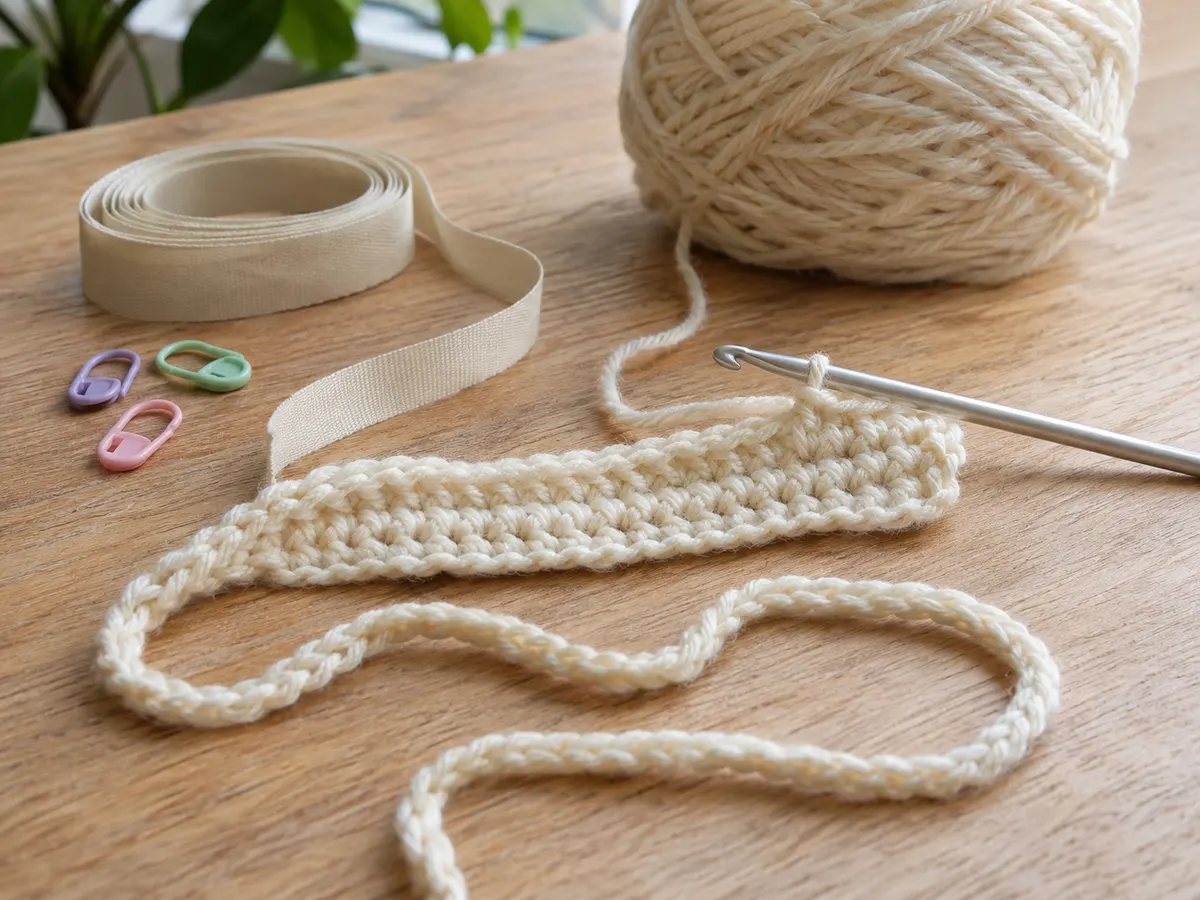 How Many Chains for a Crochet Blanket?Foundation chain = stitches for your width + 1 for single crochet or + 2 for half double and double crochet. Chain chart for 30" to 60" blankets.
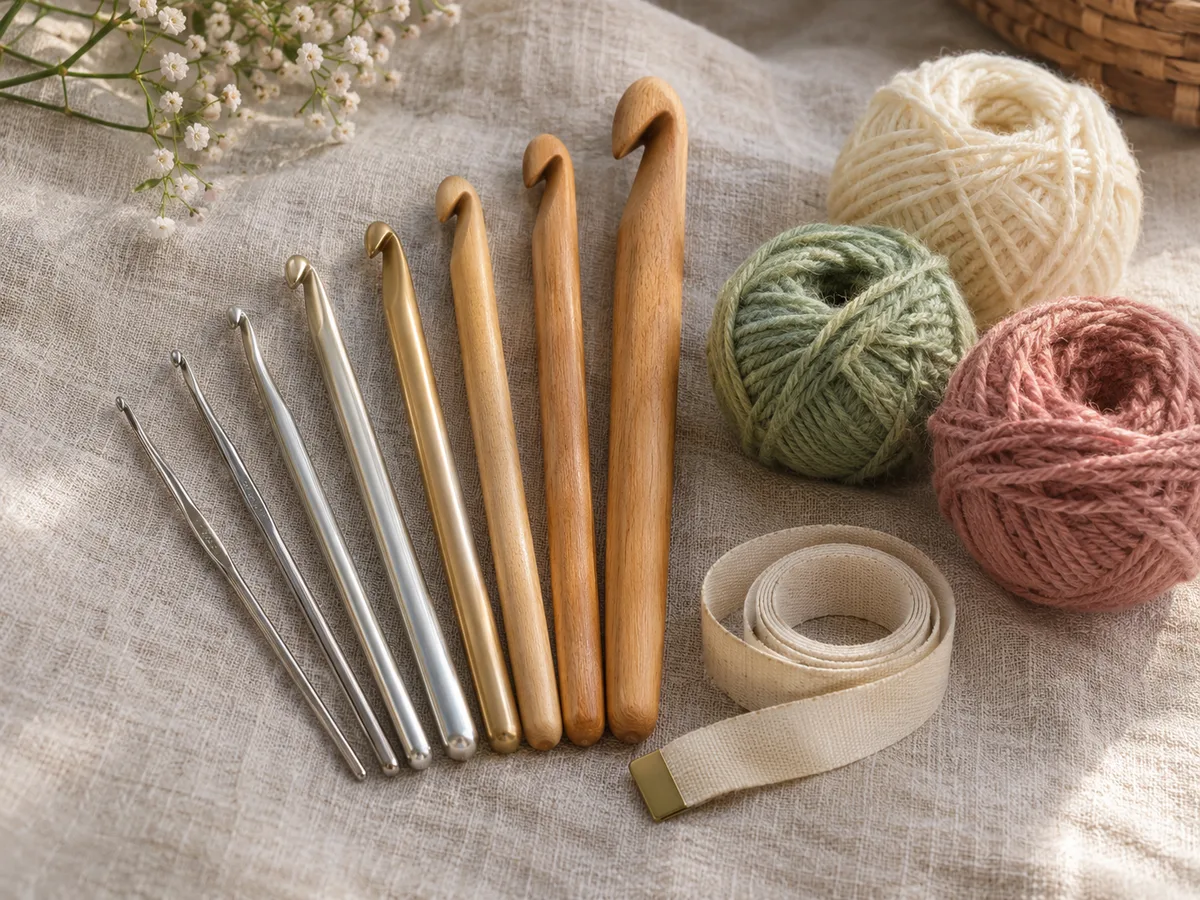 Crochet Hook Sizes Chart: mm to US and UKCrochet hook sizes side by side: millimeters, US letter and number sizes from the Craft Yarn Council, old UK numbers, and the hook range for every yarn weight.
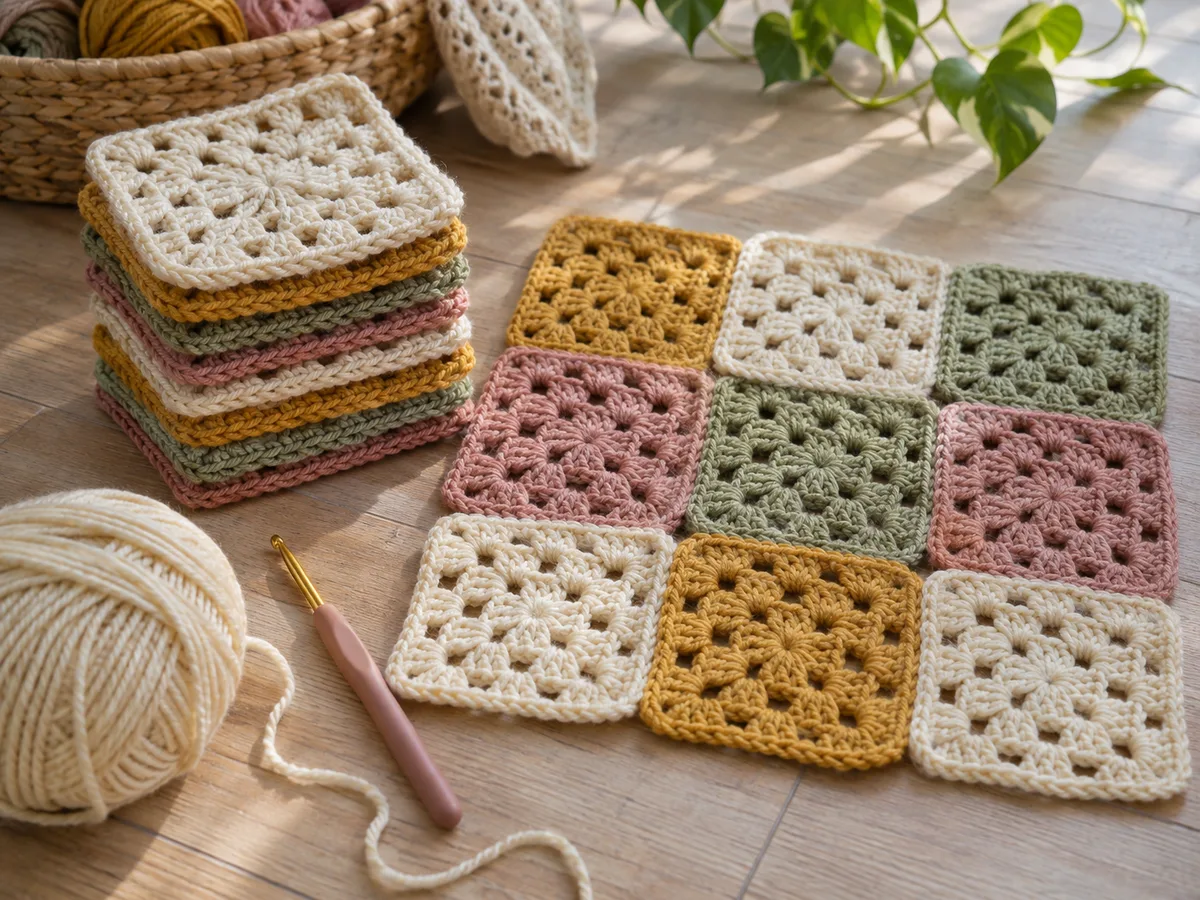 How Many Granny Squares for a Blanket?Squares across × squares down: a 66" × 90" twin takes 165 six-inch squares, a 50" × 60" throw 80. Chart for baby to king blankets with 4", 5", 6" and 8" squares.
Add this generator to your site
Free for your blog, guild page or class notes. Paste this code where you want the generator to appear. Keeping the credit line is appreciated, not required.