Needlepoint vs Cross-Stitch: Differences Explained
Needlepoint covers canvas fully, usually in tent stitch; cross-stitch makes X stitches on Aida and leaves fabric showing. Compare materials, sizing and uses.
https://needlenook.app/learn/needlepoint-vs-cross-stitch
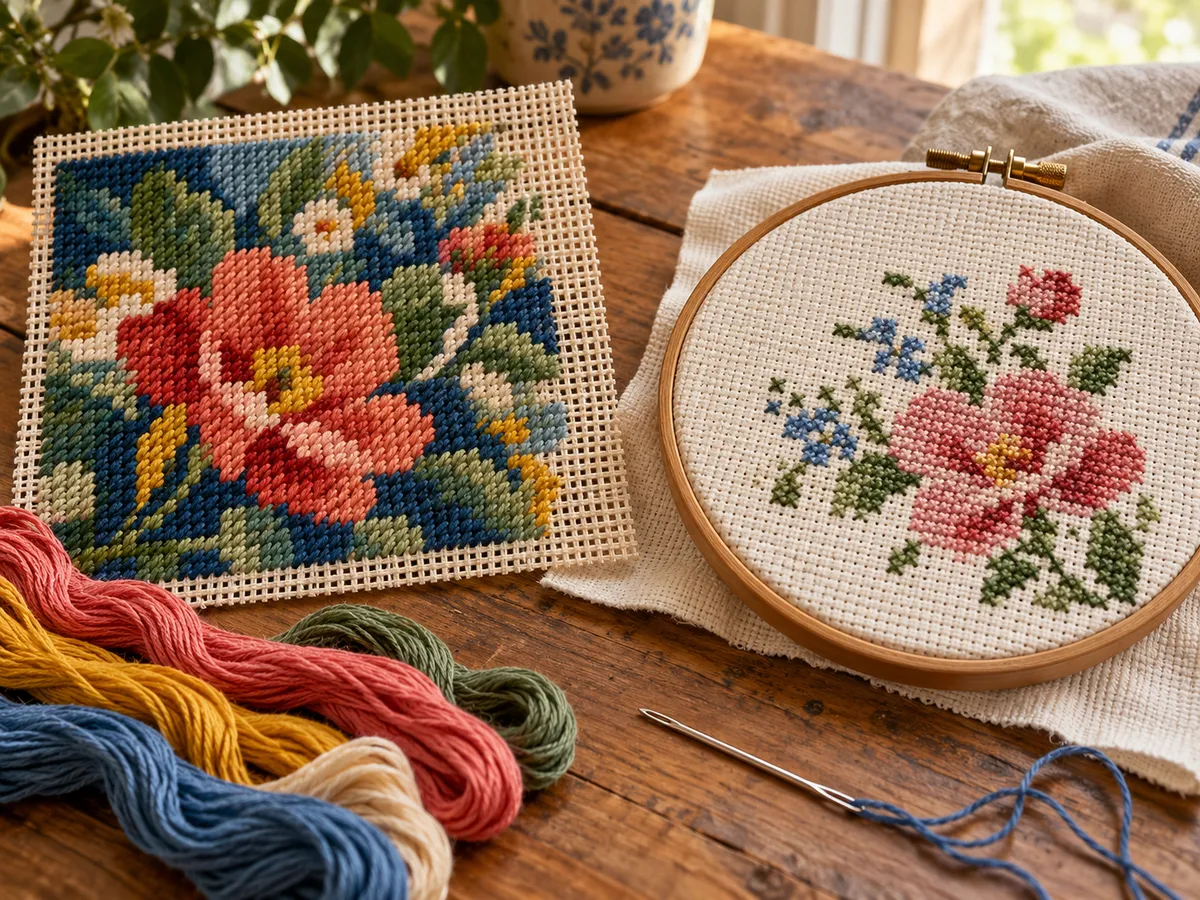
The deciding difference is coverage. Needlepoint is worked on stiff canvas, usually in tent stitch, and the stitches cover the canvas completely. Cross-stitch makes X-shaped stitches on soft Aida or evenweave and usually leaves the background fabric showing.
Both are counted from a grid chart and sized the same way, stitches divided by count. The sections compare materials, stitches, sizing and typical uses side by side, so you can pick the one that fits your project.
Key points
- Needlepoint usually covers the whole canvas; cross-stitch usually leaves background fabric visible.
- Needlepoint uses tent stitch (continental or basketweave) on mesh canvas; cross-stitch uses full X stitches on Aida or evenweave.
- Both use the same size rule: finished inches = stitches ÷ count.
- Common needlepoint canvases include 10, 13 and 18 mesh; common Aida includes 11, 14, 16 and 18 count.
- Choose needlepoint for hard-wearing items and cross-stitch for lighter, decorative pieces.
The deciding factor: coverage
Ask whether you want the background to show. Wikipedia notes that traditional needlepoint designs completely cover the canvas, so the stitching itself becomes the fabric. Cross-stitch usually stitches only the motif and leaves the Aida or linen showing as the background. That single difference drives most of the others: needlepoint uses more thread, takes longer per square inch, and produces a thicker, sturdier piece.
Side-by-side comparison
The table summarizes what usually applies to each craft. There are exceptions on both sides, such as modern needlepoint that leaves canvas showing or cross-stitch with a fully stitched background.
| Feature | Needlepoint | Cross-stitch |
|---|---|---|
| Ground | Stiff open-mesh canvas | Soft Aida, evenweave or linen |
| Count name | Mesh (holes per inch) | Count (stitches per inch) |
| Common counts | 10, 13, 18 mesh | 11, 14, 16, 18 count |
| Main stitch | Tent stitch (half of an X) | Full cross (X) |
| Background | Usually fully stitched | Usually left showing |
| Typical thread | Wool, cotton or silk thread | Stranded embroidery floss |
| Typical uses | Cushions, seat covers, belts | Framed pictures, samplers, cards |
Stitches: tent stitch vs the full cross
Tent stitch is a single small diagonal stitch over one canvas intersection, which is half of a cross. DMC describes three ways to work it that look the same on the front: basketweave, continental and half cross. Basketweave is worked in diagonal rows, is the most hard-wearing, and is less likely to distort the canvas, so it suits large areas. Continental is worked in rows and gives long stitches on the back. Half cross uses the least thread and suits pieces that will be framed.
Cross-stitch completes the X: one diagonal stitch, then a second crossing it. On Aida it is usually worked over one block, and on evenweave or linen it is often worked over two threads.
Sizing works the same way
Both crafts use the same formula: finished size in inches = stitches ÷ count. A design 140 stitches wide finishes at 14.0" (35.6 cm) on 10-mesh canvas, 10.77" (27.4 cm) on 13-mesh, and 7.78" (19.8 cm) on 18-mesh. On 14-count Aida, the same 140 stitches finish at 10.0" (25.4 cm). Add 3" of margin on every side (6" to each dimension) when you cut the canvas or fabric.
| Stitches | 10-mesh canvas | 13-mesh canvas | 18-mesh canvas |
|---|---|---|---|
| 70 | 7.00" (17.8 cm) | 5.38" (13.7 cm) | 3.89" (9.9 cm) |
| 100 | 10.00" (25.4 cm) | 7.69" (19.5 cm) | 5.56" (14.1 cm) |
| 140 | 14.00" (35.6 cm) | 10.77" (27.4 cm) | 7.78" (19.8 cm) |
| 200 | 20.00" (50.8 cm) | 15.38" (39.1 cm) | 11.11" (28.2 cm) |
Can one chart do both?
Usually, yes. A counted chart is a grid where each square is one stitch, so the same grid can be stitched in cross-stitch on Aida or in tent stitch on canvas. The finished size changes with the count, and a needlepoint version will normally need every square filled, including the background. If the chart leaves background squares blank, decide on a background color before you start a needlepoint version.
The needlepoint pattern maker on this site sizes a chart for the mesh you choose, so you can compare 10, 13 and 18 mesh before buying canvas.
When each one fits
Choose needlepoint when the piece must take wear, such as a cushion, a chair seat or a bag, because the full coverage and the sturdy canvas make a durable fabric. Choose cross-stitch when you want a lighter piece, want the fabric color to play a part in the design, or plan to frame a picture. Many stitchers find that the deciding factor is simply the look they want: dense and textile-like, or open and graphic.
Common questions
- Is needlepoint harder than cross-stitch?
- Neither is hard to learn. Needlepoint takes longer per square inch because the whole canvas is stitched. Cross-stitch has two stitches per square instead of one, but usually less area to cover.
- Can I use cross-stitch floss for needlepoint?
- Stranded floss can be used on finer canvas if you use enough strands to cover the mesh. Stitch a small test area to check coverage before you commit.
- What is the difference between basketweave and continental stitch?
- Both make the same tent stitch on the front. DMC notes that basketweave is worked in diagonal rows and is more durable and less likely to distort the canvas; continental is worked in rows and leaves long stitches on the back.
- How do I convert a cross-stitch chart size to needlepoint canvas?
- Keep the stitch count and divide by the new mesh. A 140-stitch design is 10.0" on 14-count Aida and 10.77" on 13-mesh canvas.
About this page
Written and reviewed by Maeve, Editor, Needle Nook. Last reviewed . General craft guidance; check your own gauge and measurements before cutting or stitching.
Facts on this page follow these references: